



Most successful professionals don’t think of themselves as “reactive.”
They’re accomplished.
They’re responsible.
They handle pressure.
And yet…
Many quietly live in a near-constant state of low-grade annoyance where leadership erodes in subtle ways through chronic annoyance, quiet resentment, blame, and emotional reactivity toward people, systems, or circumstances where…
- colleagues “should know better”
- leaders “don’t get it”
- systems are designed to “make things harder than they need to be”
- family members “don’t listen”
It feels justified.
It even feels intelligent.
But here’s the uncomfortable truth:
Annoyance is rarely about what’s happening now.
It’s about what’s being activated from long ago.

Why Annoyance Has So Much Power
Richard Barrett’s Values Model shows how our earliest unmet needs (often between ages 0–7) shape our core belief systems around:
• safety
• belonging
• worth
• being seen
• being enough
When these needs aren’t consistently met, we unconsciously form protective beliefs such as:
“I have to prove myself.”
“I can’t rely on others.”
“I’m not safe unless I’m in control.”
“If I don’t push, things fall apart.”
These beliefs don’t disappear with success.
They become the invisible operating system beneath adult leadership — quietly shaping how we interpret pressure, conflict, and uncertainty.
This is why two leaders can experience the same challenge — and only one becomes deeply annoyed, reactive, or derailed by it.
When something in the present moment brushes against one of these early belief structures, the response often shows up as:
• annoyance
• frustration
• irritation
• impatience
Not because the situation is truly that threatening — but because an earlier part of the nervous system has been activated.
What We Use in the Boardroom, We Learned in the Living Room
Long before you had a title, your nervous system learned what it took to feel safe, seen, or in control inside early relational environments.
Those early strategies — pleasing, withdrawing, bracing for conflict, over-functioning, controlling — don’t vanish with professional success.
They quietly travel with you into leadership.
This is why a colleague’s tone, a missed deadline, or a lack of acknowledgment can trigger reactions that feel disproportionate to the moment itself.
The boardroom activates the living room.
When pressure rises, the inner child often steps forward —
while the wise, seasoned professional momentarily steps back.
Leadership maturity isn’t about suppressing these reactions.
It’s about recognizing when an old survival pattern is trying to run a modern leadership moment.
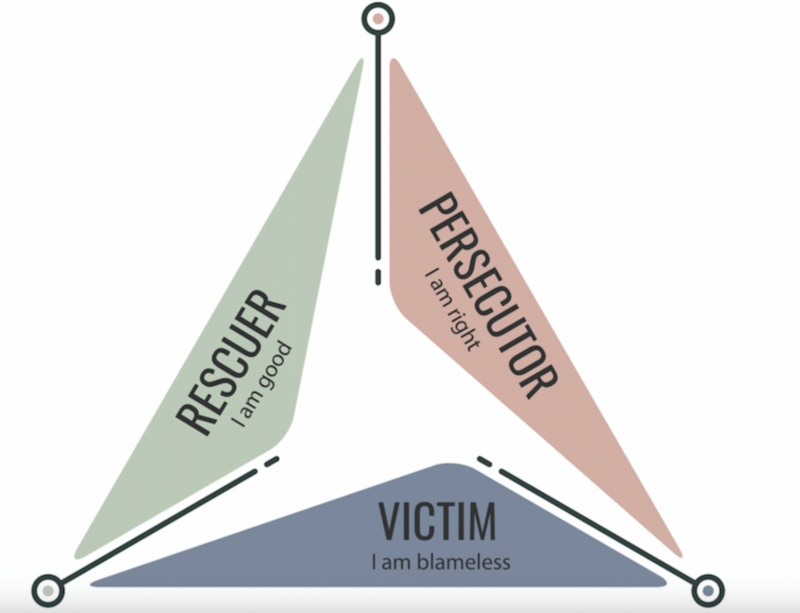
The Drama Triangle: How Annoyance Becomes Relational Noise
Unchecked annoyance often slides into what psychologists call the Drama Triangle:
- Victim: “Why is this happening to me?”
- Persecutor: “They’re incompetent.”
- Rescuer: “I’ll just fix it myself.”
From the outside, this can look like leadership.
From the inside, it’s a nervous system caught in reaction.
When we complain, blame, or mentally rehearse grievances, we are:
- giving our power to external people and situations
- reinforcing the belief that regulation comes from outside us
- training our brain to stay in low-level threat mode
The cost is subtle but real:
• energy leaks into complaint
• perspective narrows
• communication tightens
• relational trust erodes
• leaders feel “busy” but not effective
Annoyance becomes the entry point into a reactive operating system — one that gives away choice in favor of habit.

The Inner Architecture of Leadership: Designing Authority from the Inside
This is where leadership evolves — not by trying to “be less annoyed,” but by redesigning the internal architecture that governs reactions.
Practices like the Inner Board of Directors create internal structure under pressure:
- The Regulator – to calm the nervous system
- The Strategist – to widen perspective
- The Ethicist – to anchor in values
- The Realist – to ground in what’s actually happening
- The Innovator – to find creative options
This shifts leadership from:
reactive annoyance → conscious accountability
Leaders learn to:
pause
widen perspective
consult multiple internal voices
choose a response aligned with who they are becoming
This restores authority — not through control, but through coherence.
The Power Principle at Work: Cause & Effect
This is a living application of the Power of Cause & Effect.
Every reactive response you practice becomes a future reflex.
Every moment of awareness you cultivate becomes future capacity.
Annoyance, when noticed and redirected, becomes training data for leadership maturity.
Over time, leaders don’t just manage reactions —
they rewire how pressure moves through their system.
This is how leadership patterns evolve:
not by effort alone,
but by intentional design.

Question Worth Carrying
The next time you feel that familiar surge of irritation or frustration, ask:
Is this moment inviting me to react from an old survival pattern —or to lead from the authority I’ve earned?
That single pause changes what becomes possible:
Leaders move from drama to design.
From complaint to capacity.
From external blame to internal sovereignty.
A Gentle Invitation
If this landed, it’s because part of you already knows:
You don’t need to be less human.
You need a more evolved inner operating system.
My work with leaders focuses on:
- uncovering and redesigning the inner environments that shape reactivity
- building inner architecture that sustains clarity and authority
- transforming habitual annoyance into strategic awareness
- optimizing higher-brain access under pressure
This unfolds through private advisory and coaching, immersive retreats, and deeper training in the Power Principles that govern agency, coherence, and aligned leadership.
The advantage isn’t trying harder.
It’s becoming wiser about where your power goes.
Thank you for reading.
🤍
