


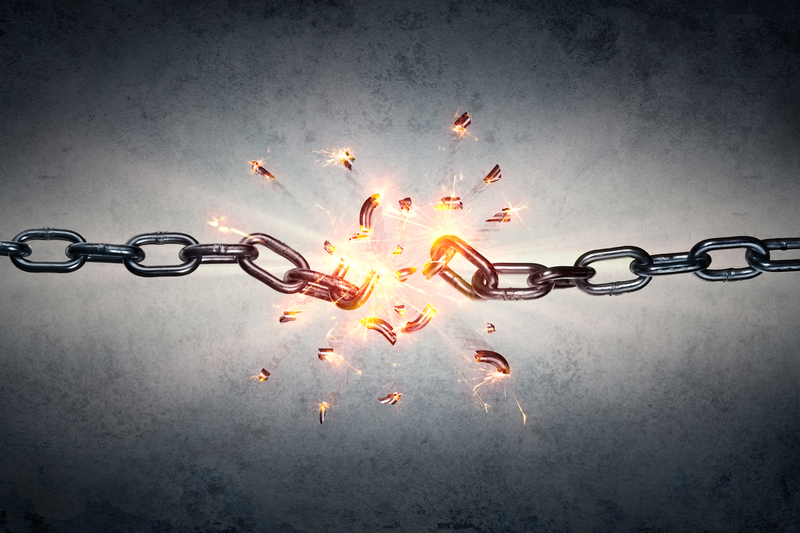
Most leadership programs aim for resilience — the ability to bounce back after stress.
But Nassim Nicholas Taleb, the thinker who coined the term anti-fragile, showed us something more interesting:
Some systems don’t just survive disruption.
They get better because of it.
A muscle strengthens after being stressed.
The immune system learns through exposure.
Great leaders evolve through challenges rather than being diminished by them.
The question is not:
How do I avoid pressure?
It is: How do I become the kind of leader pressure improves?
The Hidden Cost of “Staying Strong”
In many organizations, strength is misunderstood as:
• pushing through
• suppressing emotion
• doubling down on control
• moving faster when things get hard
That approach can look effective in the short term.
But over time it creates something fragile:
• narrow thinking
• rigid decision making
• exhausted nervous systems
• cultures that fear mistakes
Fragile systems hate surprises.
Anti-fragile systems use them as fuel.

What Makes a Leader Anti-Fragile?
Across decades of coaching executives, I’ve noticed three differences:
1. Anti-fragile leaders treat stress as information
not as a verdict about their competence.
2. They widen perspective under pressure
instead of collapsing into one anxious voice.
3. They design inner systems
that convert disruption into clarity.
In previous newsletters, this is exactly what we practiced through the Inner Board of Directors:
The Strategist
The Regulator
The Ethicist
The Realist
The Innovator
When stress hits, the goal is not to silence the anxious part —
but to invite the full board into the room.
That is anti-fragility in action.
A Familiar Business Moment
A CEO I worked with used to respond to pending business problems by waiting until the end of the day — keeping the core team late to resolve issues immediately.
It felt decisive.
It looked strong.
It created fragile outcomes.
Urgency dominated.
Perspective narrowed.
Fatigue compounded.
We introduced a simple anti-fragile protocol:
- Name the part speaking (the Urgent One)
- Invite the Strategist and Ethicist
- 90 seconds of nervous-system regulation
- Then respond
Within weeks:
- conflict dropped
- team trust rose
- decisions became faster — not slower
- the CEO reported less mental fatigue
Stress didn’t disappear.
It became a training partner.

The Power Principles Behind Anti-Fragility
Two universal principles illuminate why this works.
Power of Cause & Effect
Every response you practice becomes a future reflex.
Every pause you choose becomes a future capacity.
When leaders repeatedly respond from regulation and perspective, they are training a system that improves under pressure — not through force, but through repetition.
Power of Rhythm
Growth happens through cycles of stress and integration.
Pressure without recovery creates fragility.
Pressure followed by coherence creates strength.
A subtle polarity is always at play here:
Urgency and discernment.
Action and reflection.
Speed and wisdom.
Anti-fragile leadership doesn’t choose one side — it integrates both.
Why This Actually Works: Myelination
Every repeated response to pressure strengthens a neural pathway through myelination — the brain’s way of making frequently used circuits faster, smoother, and more automatic.
This is why reactive leadership patterns can feel so entrenched.
They aren’t just habits of thought — they are well-myelinated neural pathways.
Anti-fragile leadership works because it trains different responses under stress.
Each time a leader pauses instead of reacts, consults their Inner Board rather than defaulting to urgency, or regulates their nervous system before deciding, a new pathway is reinforced.
At first, this can feel slower or less natural.
But over time, something subtle shifts.
Leaders often notice they are no longer experiencing the same intensity of pressure.
Decisions feel clearer.
Responses feel steadier.
What once required effort begins to feel natural.
This isn’t willpower.
It’s myelination taking hold.
The brain has learned a new default — one where clarity, perspective, and calm authority are available even under pressure.
That is anti-fragility at the biological level.
Anti-Fragility Is Becoming a Leadership Requirement
The world is not slowing down.
Complexity is increasing.
Old “push harder” models are cracking.
Leaders who will thrive are those who learn to:
- metabolize uncertainty
- convert emotion into insight
- widen perspective under stress
- grow stronger through disruption
This is the essence of Higher Brain Leadership.
An Invitation
This is the work I guide leaders through:
- redesigning inner responses to pressure
- building an Inner Board that governs in real time
- aligning leadership behavior with the Power Principles
- turning stress into strategic intelligence
Whether through private coaching, immersive retreats, or the emerging Inner Architecture of Leadership training, the aim is the same:
To help you become anti-fragile — not by doing more,
but by designing differently.
If this stirred something, that’s your system recognizing a next edge.
The advantage isn’t tougher armor.
It’s smarter design.
Thank you for reading.
